Weight Loss Plateau: Why the Scale Stops Moving — and Why Detox Matters More Than You Think
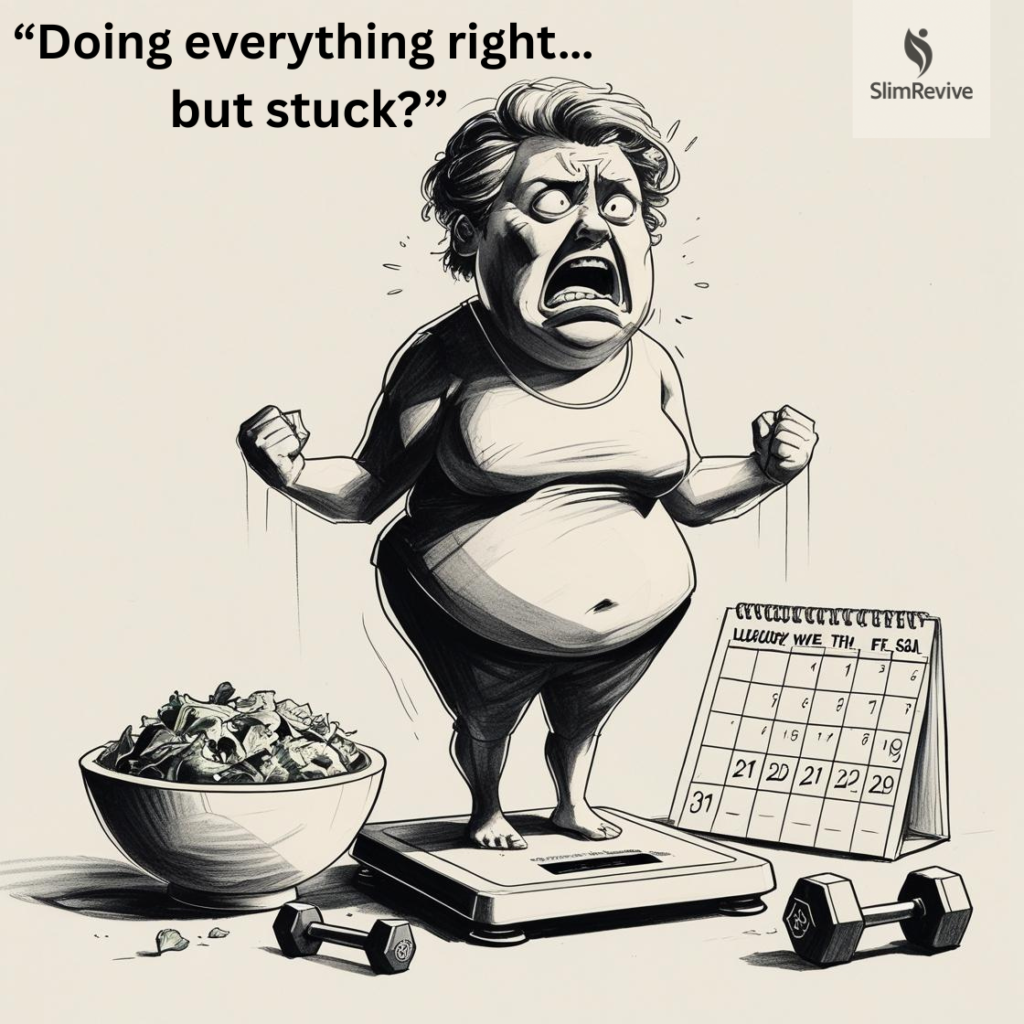
You’re eating better.
You’re moving more.
You’ve lost some weight… and then suddenly—nothing.
The scale refuses to budge.
This frustrating phase is known as a weight loss plateau, and it’s one of the most common (and misunderstood) roadblocks in any fat-loss journey. Most people respond by eating less, exercising harder, or giving up entirely.
But here’s the truth most don’t hear:
A plateau is rarely about willpower. It’s about biology.
And very often, the missing piece is detoxification.
Let’s break it down.
What Is a Weight Loss Plateau?
A weight plateau occurs when your body stops losing fat despite continued effort. Calories may be controlled, workouts consistent, yet fat loss slows or completely stalls.
This happens because the body is not a simple calorie-burning machine—it’s a highly adaptive survival system.
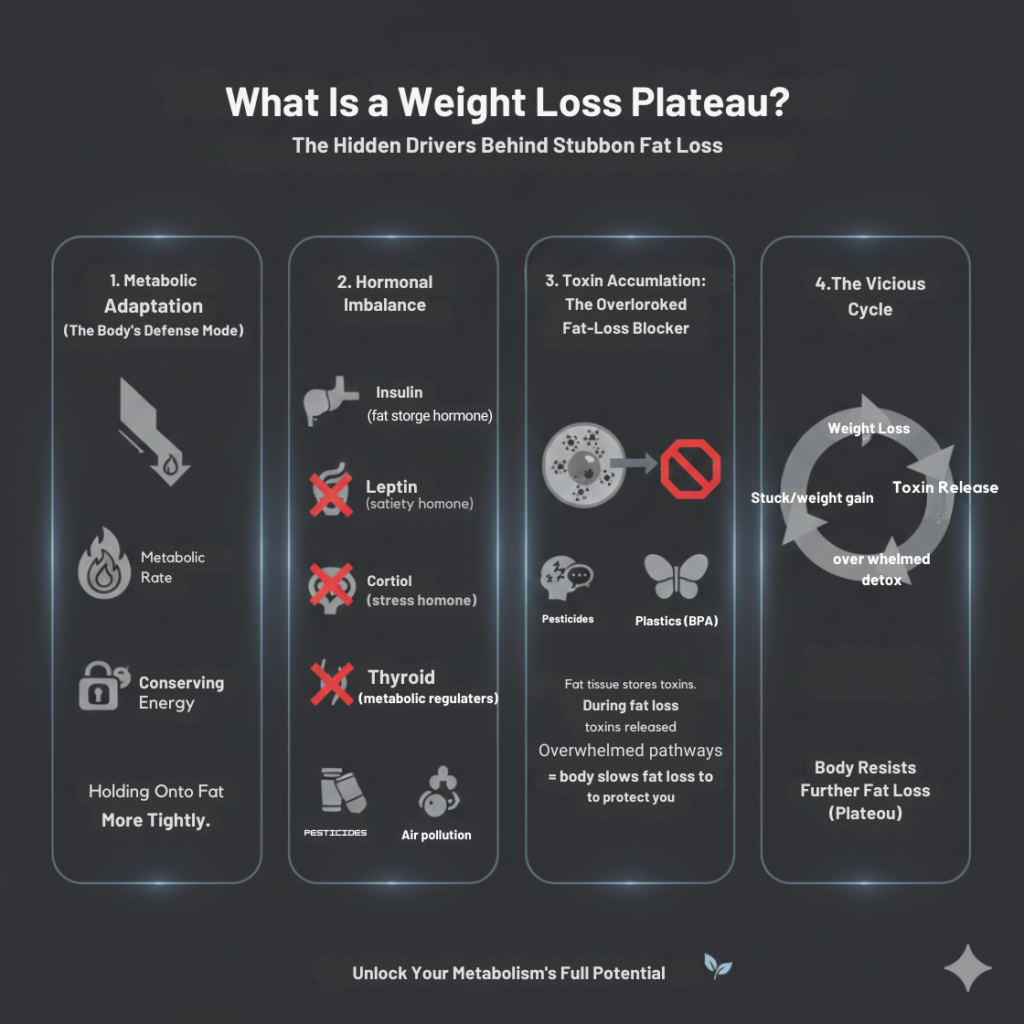
When weight loss continues for a period of time, your body responds by:
- Slowing metabolic rate
- Increasing hunger hormones
- Conserving energy
- Holding onto fat more tightly
But there’s a deeper layer most people overlook.
The Hidden Drivers Behind Weight Loss Plateaus
1. Metabolic Adaptation (The Body’s Defense Mode)
As fat mass decreases, the body reduces energy expenditure to protect against perceived starvation. Thyroid output may drop, resting metabolic rate declines, and fat burning becomes less efficient.
This is why “just eat less” often backfires.
2. Hormonal Imbalance
Fat loss depends heavily on hormonal signals, including:
Insulin (fat storage hormone)
Leptin (satiety hormone)
Cortisol (stress hormone)
Thyroid hormones (metabolic regulators)
When these signals are disrupted, the body resists further fat loss—no matter how disciplined you are.
3. Toxin Accumulation: The Overlooked Fat-Loss Blocker
Here’s the part most weight-loss plans ignore.
Fat tissue is not just storage for calories—it’s also storage for toxins.
Environmental toxins from:
Processed foods
Pesticides
Plastics (BPA)
Air pollution
Medications and chemicals
are fat-soluble, meaning your body stores them in fat cells to protect vital organs.
When you start losing fat, these toxins are released into circulation.
If your detox pathways are overwhelmed, the body may slow fat loss intentionally to prevent toxin overload.
In simple terms:
Your body holds onto fat to protect you.
This is one of the biggest reasons weight loss stalls.
Why Detox Is Critical During a Weight Loss Plateau
Detox is often misunderstood as extreme fasting or juice cleanses. In reality, true detoxification is a biological process that happens every day—primarily in the liver, gut, kidneys, and lymphatic system.
A proper detox approach:
- Supports liver function
- Improves insulin sensitivity
- Reduces inflammatory burden
- Restores hormonal balance
- Re-activates fat-burning pathways
When detox systems function efficiently, the body feels safe enough to release stored fat.
The Science Behind Detox and Fat Loss
Improved Liver Function
The liver regulates:
Fat metabolism
Blood sugar control
Hormone breakdown
A congested liver prioritizes survival over fat loss. Supporting detox allows the liver to shift back into metabolic optimization mode.
Reduced Inflammation
Chronic low-grade inflammation interferes with insulin signaling and fat mobilization. Detoxification reduces oxidative stress, allowing metabolic processes to normalize.
Hormonal Reset
By clearing endocrine-disrupting toxins, detox helps rebalance hormones that control hunger, fat storage, and energy expenditure.
Signs You May Need a Detox Reset
- Weight loss stalled despite consistency
- Cravings increasing instead of decreasing
- Fatigue or brain fog
- Bloating or digestive issues
- Poor sleep or stress sensitivity
- Fat accumulating around the belly
These are often signs your body is overloaded, not lazy.
Detox as a Sustainable Fat-Loss Strategy (Not a Crash Solution)
The goal isn’t extreme restriction. The goal is metabolic clarity.
A smart detox-support approach includes:
- Nutrients that support liver enzymes
- Antioxidants to neutralize free radicals
- Gut support for toxin elimination
- Activation of cellular repair pathways like autophagy
- Support for metabolic regulators like AMPK
When these systems are supported, fat loss often resumes—naturally and sustainably.
The Big Picture: Fat Loss Is About Safety, Not Force
Your body doesn’t resist weight loss to punish you.
It resists when it feels unsafe.
By reducing toxic load and supporting detox pathways, you send a powerful message to your body:
“It’s safe to let go.”
That’s when plateaus break.
Final Thoughts
Weight loss plateaus are not failure points—they are signals.
They tell you:
- Your metabolism needs support
- Your hormones need balance
- Your detox systems need attention
When detox is addressed intelligently, weight loss becomes less of a struggle and more of a biological response.
Because the goal isn’t to fight your body.
It’s to work with it.
SLIMREVIVE DETOX TEA LAUNCHING SOON – DESIGNED TO COMPLIMENT SLIMREVIVE TO BREAK WEIGHT LOSS PLATEAU