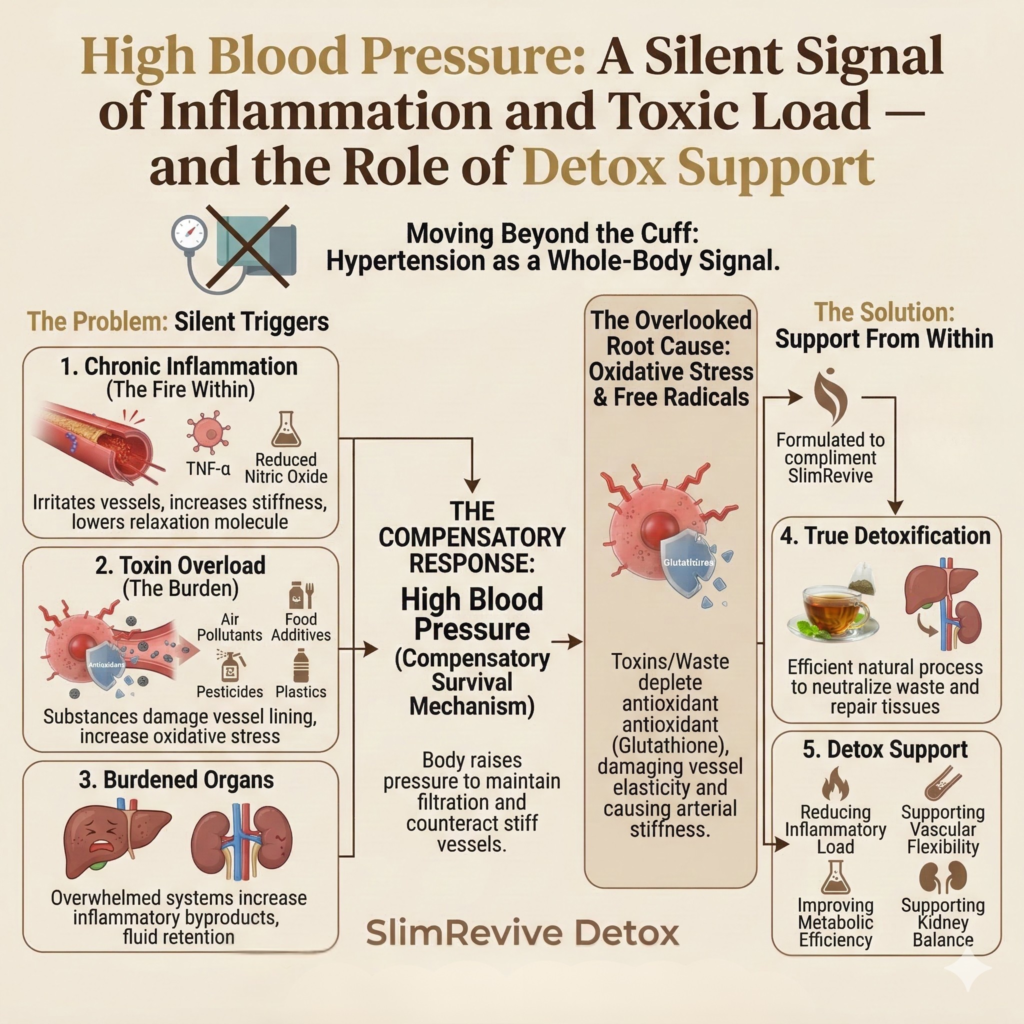
High Blood Pressure: A Silent Signal of Inflammation and Toxic Load — and the Role of Detox Support
High blood pressure is often described as a “numbers problem.”
If your reading is too high, you’re told to lower salt, reduce stress, or start medication. While these steps can be important, they often focus on controlling the symptom, not understanding why blood pressure rose in the first place.
Emerging research and systems biology reveal a deeper truth:
High blood pressure is frequently a marker of chronic inflammation, metabolic stress, and toxic burden in the body.
Seen this way, hypertension is not just a cardiovascular issue—it is a whole-body signal that internal balance is under strain.
Understanding High Blood Pressure Beyond the Cuff
Blood pressure reflects how hard your heart must work to move blood through your blood vessels.
When vessels are flexible and healthy, blood flows smoothly.
When vessels are inflamed, stiff, or narrowed, pressure rises.
This means high blood pressure is not only about the heart—it’s about:
- The condition of blood vessels
- The level of inflammation in tissues
- Hormonal and metabolic regulation
- The body’s ability to neutralize and eliminate toxins
The Inflammation–Hypertension Connection
Chronic Inflammation and Vascular Damage
Low-grade, chronic inflammation is now recognized as a key driver of hypertension.
Inflammation causes:
Irritation of blood vessel walls
Reduced production of nitric oxide (a molecule that relaxes vessels)
Increased vascular stiffness
Heightened sensitivity to stress hormones
When blood vessels lose flexibility, pressure naturally increases.
This inflammatory state is often fueled by:
Processed foods and excess sugar
Oxidative stress
Chronic stress
Environmental toxin exposure
Toxins: The Overlooked Contributor to High Blood Pressure
Modern life exposes the body to thousands of chemical compounds daily, including:
- Air pollutants
- Food additives and preservatives
- Pesticide residues
- Plastic-derived chemicals
- Heavy metals and industrial byproducts
Many of these substances are pro-inflammatory and endocrine-disrupting.
When detoxification systems become overloaded, toxins can:
- Damage blood vessel lining (endothelium)
- Increase oxidative stress
- Disrupt kidney and liver regulation
- Interfere with hormonal control of blood pressure
In response, the body raises blood pressure as a compensatory survival mechanism.
In this context, hypertension becomes a protective response, not a random malfunction.
The Role of the Liver and Kidneys in Blood Pressure Regulation
The Liver: Metabolic and Detox Control Center
The liver plays a major role in:
Processing toxins
Regulating cholesterol and fats
Managing inflammation
Balancing hormones involved in vascular tone
When the liver is burdened by toxins or metabolic overload, inflammatory byproducts increase—placing additional stress on blood vessels.
The Kidneys: Pressure and Fluid Regulators
The kidneys directly control:
Fluid balance
Sodium handling
Blood volume
Toxin exposure and inflammation can impair kidney microcirculation, forcing the body to retain fluid and increase pressure to maintain filtration.
Supporting detox pathways reduces strain on both liver and kidneys.
Oxidative Stress, Free Radicals, and Vascular Tension
Toxins and metabolic waste increase oxidative stress, leading to excess free radicals that damage blood vessel walls.
This damage:
- Triggers inflammation
- Reduces vessel elasticity
- Promotes arterial stiffness
Over time, blood pressure rises as the cardiovascular system compensates.
Antioxidant support is therefore a critical part of reducing inflammatory stress linked to hypertension.
Detoxification: What It Really Means
Detox is often misunderstood.
True detoxification is not extreme fasting or harsh cleansing. It is a continuous biological process involving:
- Liver enzyme pathways
- Digestive elimination
- Kidney filtration
- Lymphatic circulation
- Cellular repair systems
When these systems function efficiently, the body is better able to:
- Neutralize inflammatory compounds
- Remove metabolic waste
- Protect blood vessels
- Maintain healthy pressure balance
How Detox Support May Help Blood Pressure Balance
While detox is not a replacement for medical treatment, supporting detox pathways may help address root contributors to high blood pressure.
1. Reducing Inflammatory Load
By improving elimination of inflammatory toxins, detox support can:
Reduce vascular irritation
Improve endothelial function
Support healthier blood flow
2. Supporting Vascular Flexibility
Lower oxidative stress allows blood vessels to regain elasticity, reducing resistance and pressure.
3. Improving Metabolic Efficiency
Efficient detox supports insulin sensitivity, lipid metabolism, and hormonal balance—all of which influence blood pressure regulation.
4. Supporting Kidney and Fluid Balance
Reduced toxic burden helps kidneys regulate fluid more effectively, lowering pressure-related strain.
Signs High Blood Pressure May Be Linked to Inflammation or Toxic Load
Some people with hypertension also experience:
- Persistent fatigue
- Brain fog
- Water retention or bloating
- Headaches
- Digestive sluggishness
- Abdominal fat accumulation
These signs often point to systemic imbalance rather than an isolated heart issue.
A Balanced, Responsible Approach
It is important to be clear:
- High blood pressure should always be medically monitored
- Detox support does not replace prescribed treatment
- Lifestyle, nutrition, stress management, and medical care work best together
Detox support should be viewed as foundational support, helping the body function more efficiently—not as a cure.
The Bigger Picture: Listening to the Body’s Signals
High blood pressure is not just a number—it is a message.
Often, it reflects:
- Chronic inflammation
- Metabolic overload
- Environmental toxin exposure
- Reduced detox capacity
When detox pathways are supported and inflammatory burden is reduced, the body may naturally move toward better balance.
Final Thoughts
High blood pressure is one of the most common health challenges worldwide, yet it is frequently treated only at the surface level.
Understanding hypertension as a marker of internal inflammation and toxic stress opens the door to more holistic, sustainable support strategies.
By improving detox efficiency, reducing oxidative stress, and supporting liver, kidney, and vascular health, the body is better equipped to regulate pressure naturally—alongside appropriate medical care.
True health is not about silencing signals.
It is about understanding them—and restoring balance from within.
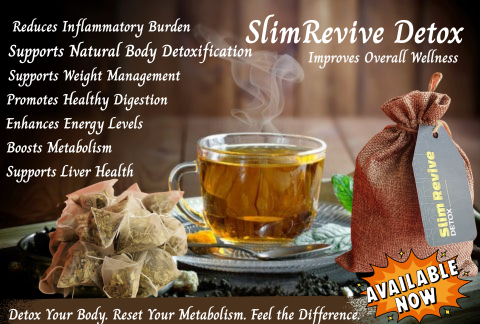
Try SlimRevive Detox Today.